
Porting mortgage guide
Porting Your Mortgage Explained
Understand how mortgage porting works, when it may help, what lenders check and why porting is not always guaranteed.

Porting may let you move your current mortgage deal to a new property, but your lender must still approve the application.
Useful reminder: A portable mortgage is not the same as guaranteed approval.
Quick answer
What does porting a mortgage mean?
Porting your mortgage means moving your existing mortgage deal from your current home to a new property. It can be useful if you are on a competitive rate or want to avoid an early repayment charge. However, porting is not automatic. Your lender will normally reassess your income, outgoings, credit profile, deposit and the new property before deciding whether to approve it. If you need to borrow more, the extra borrowing may be placed on a separate product with a different rate. In some cases, taking a new mortgage may be more suitable than porting.
Important: Your home may be repossessed if you do not keep up repayments on your mortgage.
Porting usually means transferring your existing mortgage product to your next property.
Your lender will normally reassess affordability, credit status and the new property.
Any extra borrowing may be arranged on a separate rate or product.
Porting can help, but a new mortgage may sometimes work out better overall.
Key points
Key takeaways about porting your mortgage
Request a callback
Request a callback
Have a question about this guide? Leave your details and an adviser can talk you through the next step.
Main guide
How does mortgage porting work?
Mortgage porting is when you move your existing mortgage product from one property to another. The mortgage itself is usually repaid when you sell your current home, then a new mortgage is set up on the property you are buying, using the same product terms where the lender agrees.
This can be helpful if your current deal has a good rate or if leaving it would trigger an early repayment charge. Instead of ending the deal completely, you may be able to carry it over to your next home.
Why porting is not automatic
A common misunderstanding is that a portable mortgage can simply be transferred without checks. In practice, your lender will normally treat the move as a new application. They may reassess your income, outgoings, credit profile, deposit and the new property.
The lender also needs to be comfortable with the property you are buying. If the property does not meet their criteria, porting may not be possible even if your finances look acceptable.
Porting can be useful, but it needs to be checked carefully before you make assumptions about your budget or moving costs.

What will the lender check?
When you ask to port your mortgage, your lender will usually carry out affordability and eligibility checks. These checks can be similar to a standard mortgage application, even though you are already an existing customer.
The lender may review:
- your income and employment status
- your regular outgoings and credit commitments
- your credit history
- your deposit and sale proceeds
- the price and type of the new property
- whether you need to borrow more
- whether the timing of the sale and purchase fits their porting rules
If your circumstances have changed since you first took the mortgage, the lender’s decision may be different this time. For example, a change in income, new credit commitments, childcare costs or a change in employment could affect affordability.
If you need additional borrowing, the extra amount is often arranged separately. This means part of your mortgage may stay on your existing rate, while the new borrowing is on a different rate or product. This can create different monthly payments and different product end dates, so it is worth checking how it will work.
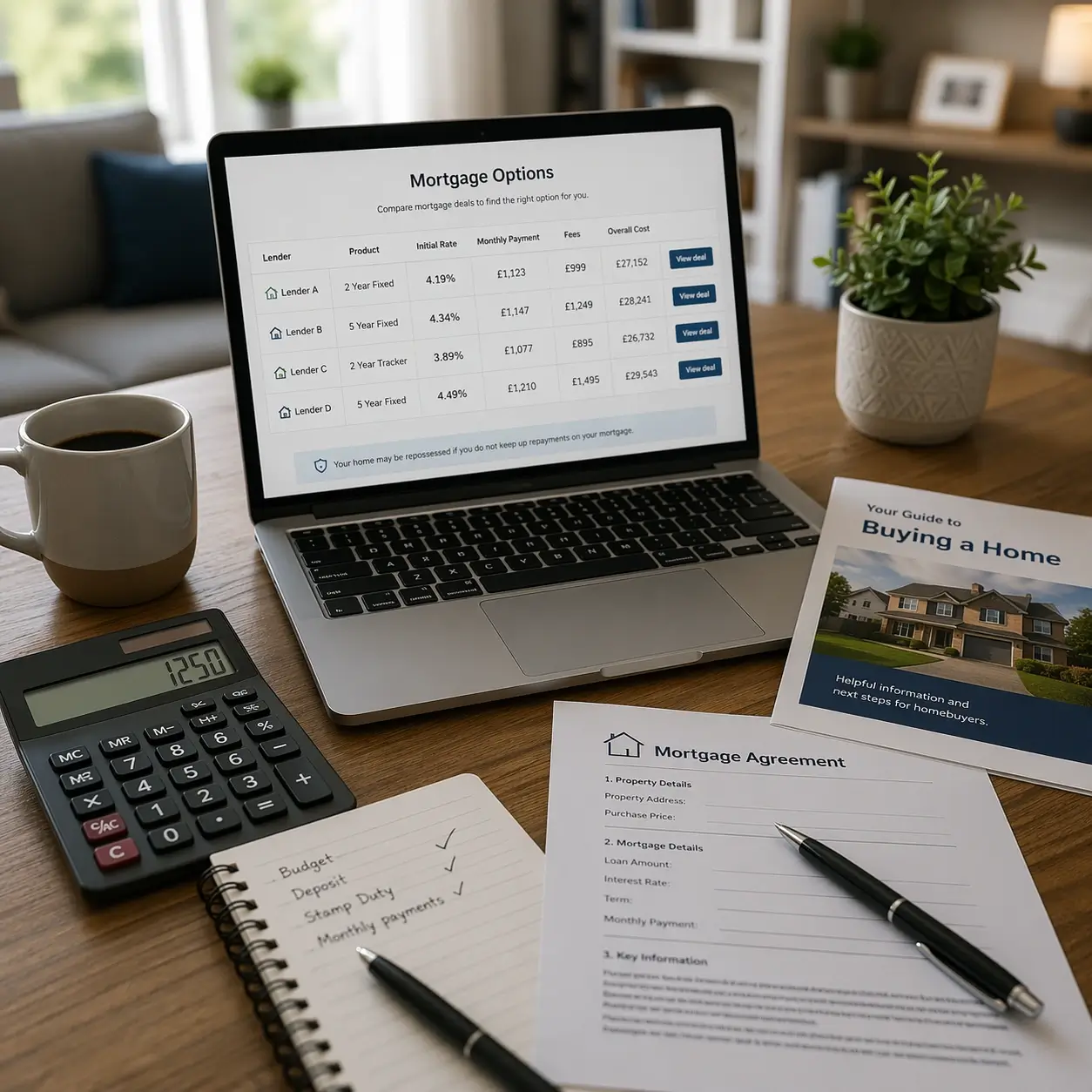
This is a simplified example. Porting rules, extra borrowing and rates can vary by lender.
When porting may be useful
Porting may be worth considering if your existing mortgage rate is lower than current available deals, or if leaving the mortgage would trigger an early repayment charge. It can also be useful if your current lender’s porting process fits your sale and purchase timing.
However, the benefit depends on the full picture. You need to look at rates, fees, charges, monthly payments, affordability, property criteria and how long you plan to stay in the new home.
When porting may not work
Porting may not be available if your lender declines the new application, if your affordability no longer fits, or if the new property does not meet criteria. It may also be less attractive if the extra borrowing is expensive or if a new mortgage elsewhere gives a better overall result.
Some borrowers also find the split mortgage structure awkward. If part of the mortgage ends on one date and another part ends later, future remortgaging can become more complicated.
Early repayment charges and timing
One reason people look at porting is to avoid an early repayment charge. But the rules depend on your mortgage offer and lender. Some lenders require the sale and purchase to complete at the same time. Others may allow a short gap, but conditions can apply.
If there is a delay between selling and buying, it is important to check whether any charge is payable and whether it can be refunded if you complete on the new purchase within a set period.
Common mistakes to avoid
Do not assume that “portable” means “guaranteed”. A portable product only means the lender may allow the product to move, subject to approval.
Another common mistake is looking only at the early repayment charge. Sometimes paying a charge and taking a new mortgage may still be better overall, depending on rates, fees and future plans.
It is also worth checking the property early. Flats, unusual construction, short leases or valuation issues may affect whether a lender is willing to lend.
How The Mortgage Hive can help
The Mortgage Hive can help you review your current mortgage and understand whether porting is likely to be an option. We can look at your current balance, product end date, early repayment charges, sale proceeds and likely new borrowing needs.
We can also help you understand whether your current lender’s approach fits your circumstances and the property you want to buy.
Comparing porting with a new mortgage
Porting is only one route. Sometimes it may be the most sensible option. In other cases, taking a new mortgage may offer more flexibility or a better overall outcome.
The comparison should include the existing rate, new rates, fees, early repayment charges, extra borrowing costs, future product end dates and how long you expect to stay in the property.
Fee-free mortgage advice
The Mortgage Hive provides whole-of-market mortgage advice and does not charge a broker fee. We can help you compare your current lender’s porting option with wider mortgage options, so you can make a more informed decision.
What to do next
If you are thinking about moving home, gather your current mortgage details before you start viewing seriously. Your mortgage balance, current rate, deal end date and early repayment charge will all help shape the next step.
Your home may be repossessed if you do not keep up repayments on your mortgage.
Useful questions to ask your adviser.
- Is my current mortgage actually portable?
- Will my lender reassess my income and affordability?
- Could I avoid or reduce an early repayment charge by porting?
- If I need to borrow more, what rate will the extra borrowing be on?
- Would a new mortgage be cheaper or more flexible overall?
- What happens if my sale and purchase do not complete on the same day?
- Could the new property affect whether porting is approved?
MORTGAGE-READY STEP
WHAT IS A DECISION IN PRINCIPLE?
A Decision in Principle, sometimes called an Agreement in Principle or Mortgage in Principle, is an initial indication from a lender of what they may be prepared to lend based on information provided at that stage.
It can help you understand a possible budget and show estate agents that you have started the mortgage process. It is not a full mortgage offer and can still change once the full application, documents, credit checks, valuation and underwriting are completed.
Fee-free mortgage advice
Don’t get stung, let The Mortgage Hive save you money.
- Free advice, nothing to lose
- Open, honest, straight-talking guidance
- Great friendly customer service
- Online, over the phone, or face to face
- Residential mortgages
- Buy-to-let mortgage advice
- Self-employed income
- Adverse credit cases
Speak to a mortgage broker before you apply.
Clear, friendly guidance with no pressure and no guesswork.
Lender access
Access to over 100 lenders.
We can help you explore options from a wide range of mainstream and specialist lenders, giving you a clearer view of what may be possible based on your circumstances.
Process map
How the mortgage advice and application process usually flows
This visual route map shows the usual stages from an initial conversation through to application, offer and completion.
We look at whether you are buying, remortgaging, moving home, investing or dealing with a more complex situation.
Income, outgoings, deposit or equity, credit history, property type and lender requirements are reviewed.
Suitable mainstream and specialist lenders are compared to see what may be possible based on your circumstances.
Documents are prepared, fees and repayments are checked, the application is submitted and lender questions are handled through to offer and completion.
WHY CLIENTS CHOOSE THE MORTGAGE HIVE
WHY CLIENTS CHOOSE THE MORTGAGE HIVE.
Mortgage decisions can feel confusing, especially when lender criteria, affordability and rates all need to be considered. The Mortgage Hive helps make the process clearer, with fee-free mortgage advice and access to a wide range of lenders.
FEE-FREE ADVICE
We do not charge an advice fee for mortgage advice, so you can speak to us before deciding your next step.
WIDE LENDER ACCESS
We can compare options from over 100 mainstream and specialist lenders, depending on your circumstances.
CLEAR GUIDANCE
We explain the options, costs and criteria in plain English, without pressure or jargon.
FLEXIBLE SUPPORT
Speak to us online, over the phone or face to face, whether you are buying, remortgaging or exploring buy-to-let.
Sources checked
Trusted sources used to support this guide.
These sources support the educational content and should be checked again when the page is reviewed or updated.
FAQs
Common mortgage porting questions.
What does porting a mortgage mean?
Porting means moving your existing mortgage product to a new property, subject to your lender’s approval. The current mortgage is usually repaid when you sell, and a new mortgage is arranged on the next home using the same product terms where the lender allows it.
Is porting a mortgage guaranteed?
No. Even if your mortgage is described as portable, your lender will normally reassess your application. They may check affordability, credit history, income, deposit and the new property. If you no longer meet criteria, or the property is not acceptable, porting may be declined.
Can I borrow more when porting?
You may be able to borrow more if the lender agrees and affordability fits. The extra borrowing is often placed on a separate mortgage product, which may have a different rate, fee and end date from your existing deal. This should be reviewed carefully.
Will porting avoid an early repayment charge?
Porting may help avoid or reduce an early repayment charge, but the rules depend on your lender and mortgage terms. Some lenders require the sale and purchase to complete together. Others may allow a gap, but conditions can apply, so check before committing.
Is porting better than remortgaging?
Not always. Porting may be useful if your current rate is attractive or the early repayment charge is high. A new mortgage could be better if the overall cost, flexibility or future plans work more favourably. It is best to compare both routes properly.
What happens if my new property is declined?
If the lender is not comfortable with the new property, porting may not be possible even if your personal affordability is acceptable. Property type, valuation, construction, lease length or condition can all matter. You may need to consider another lender or property.
Can The Mortgage Hive help me decide whether to port?
Yes. The Mortgage Hive can review your current mortgage, early repayment charges, extra borrowing needs and wider mortgage options. We do not charge a broker fee, and we can help compare porting with taking a new mortgage.
Our reviews
Trust should be easy to verify.
Read what clients say about The Mortgage Hive on Google, then speak to us before you decide what to do next.
Moving soon?
Check your porting options before you commit
Porting your mortgage can be useful, but it is not always the best or simplest route. The Mortgage Hive can help you compare your current lender’s option with wider mortgage choices before you move.
Important mortgage information
Your home may be repossessed if you do not keep up repayments on your mortgage. Mortgage approval is subject to status, affordability and lender criteria.
Interest rates, fees and criteria can change, and early repayment charges may apply. This guide is for general information only and is not personal financial advice.