
What happens at a remortgage valuation, and what if it comes in low?
The lender values your home to check it is suitable security for the loan. This may be a desktop or automated valuation using property data, or a visit from a surveyor. If the value comes in lower than expected, your loan-to-value rises, which can change the rates available or how much you can borrow.
You could ask for a review with evidence of recent sales, try a different lender, borrow less, or compare a product transfer with your current lender, which often needs no new valuation. The lender’s valuation is for the lender. It is not a survey of your home’s condition.
What a remortgage valuation is for
The valuation tells the lender what your home is worth as security. It is not a full survey and is not designed to tell you about repairs. Some lenders include a basic valuation on remortgages, and some charge for it.
Important: Your loan-to-value is based on the lender’s valuation, not on online estimates or what you think the home is worth.
Desktop or physical valuation: what is the difference?
A desktop or automated valuation uses data, such as recent sales of similar homes nearby, without anyone visiting. Lenders often use these where there is enough data and the loan-to-value is lower. A physical valuation means a surveyor visits, usually briefly, to look at the property, its condition, size and location. Which one you get depends on the lender, the property and how much you borrow.
What if the valuation comes in low?
Illustrative example: you expect your home to be worth £300,000 and want to borrow £225,000, an LTV of 75%. If the lender values it at £280,000, the same loan is an LTV of just over 80%, which might move you into a different rate band. These figures are illustrative only.
The options often include:
- asking for a review, with evidence of recent comparable sales; HM Land Registry’s sold price data on GOV.UK can help;
- applying to a different lender, which may value the home differently;
- borrowing less to bring the LTV back into the band you wanted;
- comparing a product transfer with your current lender, which often does not need a new valuation.
A review is not always successful, and each lender sets its own process.
What does a valuer look at?
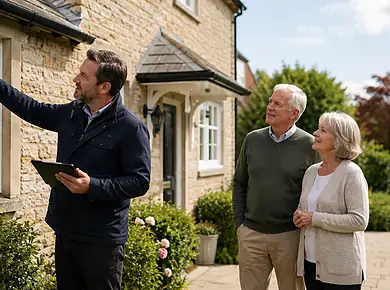
On a visit, the valuer usually notes the type and size of the property, its general condition, any obvious defects, extensions or alterations, and the local area. They may flag issues for the lender, such as unusual construction or signs of movement, which can affect whether the lender will lend.
Can I prepare for the valuation?
Make sure the valuer can get in and see each room. Have details ready of any work done, such as an extension or a new boiler, with planning or building regulations paperwork where relevant. Check recent sold prices nearby so your expectations are realistic. Our loan-to-value calculator shows how different values change your LTV.
Three situations after a valuation
These examples are illustrative, not real clients. Every lender and every case is different.
Value close to an LTV band
A small drop in value pushes the LTV over a band. Borrowing slightly less keeps the original band.
Recent extension
The valuer may not fully reflect the work. Evidence of the work and comparable sales can support a review.
Low value, staying put
A product transfer with the current lender, which often needs no new valuation, is compared with remortgaging.
Desktop or physical valuation?
The lender usually decides which it uses.
Desktop or automated
- Uses property data
- No visit needed
- Often quicker
- Not available for every home or loan
Physical valuation
- A surveyor visits
- Takes account of condition and features
- Can take longer to arrange
- Still not a full survey
Your questions answered
Do you need a valuation to remortgage?
Usually, if you move to a new lender. A product transfer with your current lender often does not need one.
What is a desktop valuation?
A valuation based on property data, such as recent nearby sales, without a visit to your home.
Can I challenge a low remortgage valuation?
You can ask the lender to review it, usually with evidence of comparable sales. It is not always successful.
Does a low valuation mean I can’t remortgage?
No. It may change your loan-to-value, rate or borrowing, but options often remain.
Is a remortgage valuation the same as a survey?
No. It is for the lender’s purposes and does not give a detailed report on your home’s condition.
Talk through a valuation that came in low.
This page provides general information, not personal advice. The Mortgage Hive can look at your loan-to-value and the options with each lender. We don’t charge a broker fee. Other costs may apply.
Request a call back
Leave your details and an adviser will call you at a time that suits. There is no obligation to go ahead.
This page is general information, not personal advice. Your home may be repossessed if you do not keep up repayments on your mortgage. The Mortgage Hive is FCA authorised. Our mortgage advice covers homes across the UK. Some rules and lender options differ in Scotland and Northern Ireland. We don’t charge a broker fee. Other costs may apply.